Tel: +86 311 8595 5658 E-mail: admin@yuanlvfilter.com
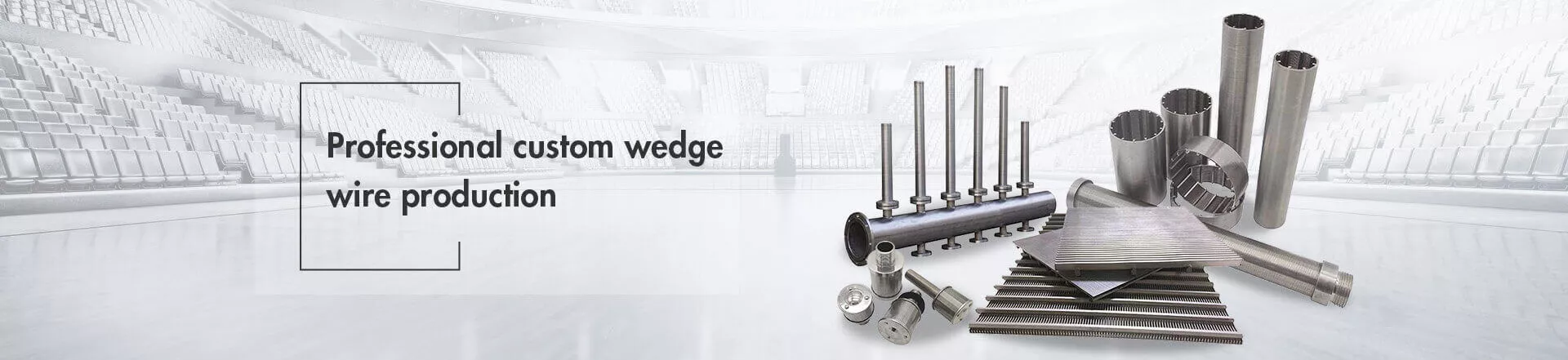
A hydro sieve screen is a gravity-driven solid-liquid separation device that utilizes a curved stainless steel wedge wire panel to remove suspended solids from wastewater. The concave (parabolic) screen geometry enhances flow distribution, improves separation efficiency, and reduces screen blinding without requiring mechanical movement or external power.
Hydro sieve screens are widely used as primary or pre-treatment equipment in municipal and industrial wastewater systems due to their reliability, simplicity, and energy efficiency.
A hydro sieve screen is a static screening system constructed with a curved wedge wire panel mounted inside a stainless steel housing. The screen operates entirely under gravity flow.
In most industrial applications, the wedge wire panel is:
• Curved (concave or parabolic)
• Made of stainless steel (SS304 or SS316L)
• Manufactured with precision slot openings
The curved geometry is not incidental — it is central to performance. It allows wastewater to flow tangentially across the surface, increasing effective screening area and improving solids conveyance.
Hydro sieve screens are sometimes referred to as:
• Curved wedge wire screen
• DSM screen
• Gravity-fed screen
In many wastewater treatment contexts, a hydro sieve screen can be considered an integrated sieve bend unit optimized for continuous liquid-solid separation.
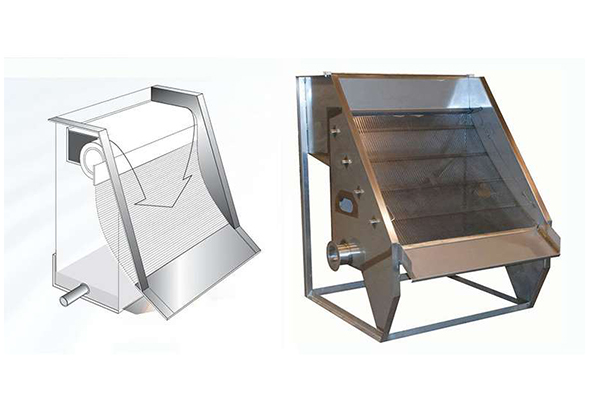
| Component | Function |
|---|---|
| Curved Wedge Wire Panel | Solid-liquid separation |
| Stainless Steel Housing | Structural integrity |
| Inlet Distributor | Uniform flow distribution |
| Solids Discharge Outlet | Continuous solids removal |
| Spray Bar (Optional) | Surface cleaning |
The wedge wire profile wire creates V-shaped slots that widen inward. This structure minimizes clogging and enhances durability under continuous operation.
The working principle of a hydro sieve screen is based on gravity and tangential flow dynamics.
Step-by-Step Operation
1. Wastewater enters through the inlet distributor.
2. Flow spreads across the curved wedge wire surface.
3. Water passes through precision slot openings.
4. Suspended solids remain on the surface.
5. Solids slide downward along the curved panel due to gravity.
6. Screened water exits through the lower outlet.
Because the screen is curved, the flow follows a tangential path. This increases contact time between liquid and screening surface, enhancing separation efficiency.
No rotating parts, motors, or mechanical drives are required.
The curved (parabolic or concave) design provides several engineering advantages:
• Increased effective screening area
• Improved tangential flow distribution
• Enhanced solids conveyance
• Reduced screen blinding
• Higher throughput under gravity-fed conditions
• Lower maintenance frequency
The combination of curved geometry and precision slot openings makes hydro sieve screens particularly effective for continuous wastewater pre-treatment.
Proper engineering design is essential for performance optimization.
1. Slot Size
Slot size determines particle retention efficiency.
Typical range:
0.25 mm
0.5 mm
0.75 mm
1.0 mm
Up to 2.0 mm
Smaller slots provide finer filtration but may require more frequent cleaning.
2. Flow Capacity
Flow capacity depends on:
Slot size
Screen width
Open area percentage
Installation angle
Wastewater characteristics
Typical engineering range:
| Parameter | Typical Range |
|---|---|
| Slot Size | 0.25–2 mm |
| Flow Capacity | 5–200 m³/h |
| Material | SS304 / SS316L |
| Screen Radius | Engineered per flow requirement |
3. Material Selection
Material choice affects corrosion resistance and lifespan.
SS304: Suitable for general industrial wastewater
SS316L: Recommended for corrosive, saline, or chemical-heavy environments
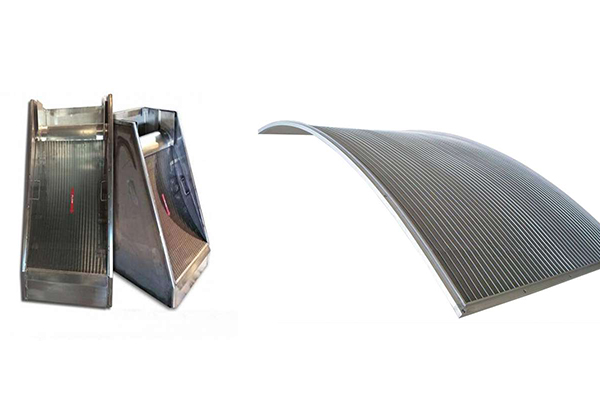
Although closely related, hydro sieve screens and traditional sieve bend screens may differ in configuration and system integration.
| Feature | Hydro Sieve Screen | Traditional Sieve Bend |
|---|---|---|
| Panel Shape | Curved (concave / parabolic) | Curved |
| Integration | Complete unit with housing | Often modular panel |
| Primary Application | Wastewater treatment | Mining, pulp & paper |
| Flow Type | Gravity-fed | Gravity-fed |
In many wastewater systems, the hydro sieve screen is essentially a fully integrated sieve bend configuration designed specifically for liquid-solid separation in treatment plants.
Related Reading: Hydro Sieve vs Sieve Bend Screen
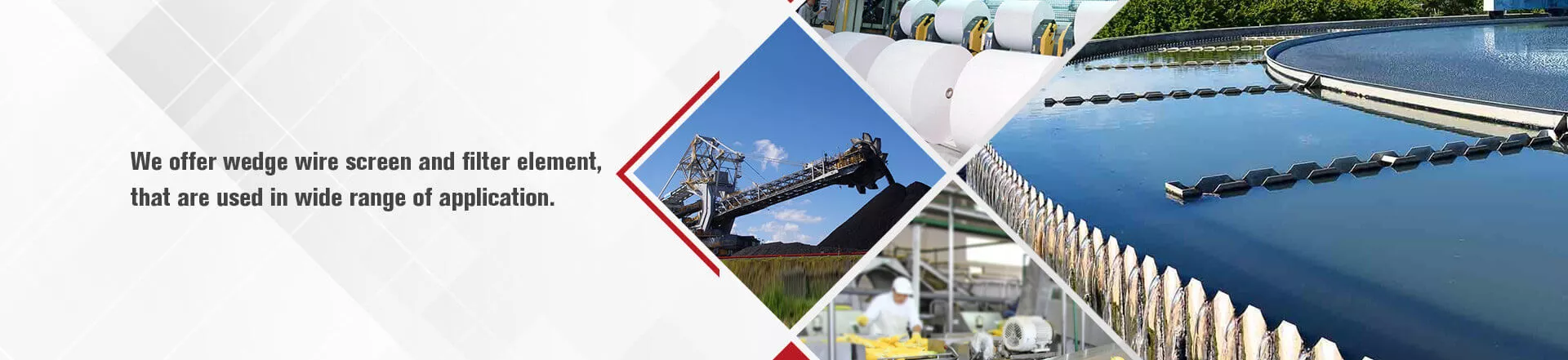
Hydro sieve screens are widely used in:
Municipal wastewater treatment plants (See our municipal wastewater Hydrosieve Screen case study to learn how a treatment plant reduced pump blockages and maintenance costs after upgrading its pretreatment system.)
Food and beverage processing
Slaughterhouse wastewater filtration
Pulp and paper industry
Industrial effluent pre-treatment
Agricultural waste separation
They are typically installed before sedimentation tanks, dissolved air flotation (DAF) systems, or biological treatment stages.
Advantages of Hydro Sieve Screens
Hydro sieve screens offer several operational advantages:
No moving parts
Low energy consumption
Continuous operation
Simple mechanical structure
Long service life
Reduced maintenance costs
High structural strength
These characteristics make them ideal for facilities seeking stable and cost-effective screening solutions.
Frequently Asked Questions
1. What is the difference between a hydro sieve and a sieve bend?
A hydro sieve screen typically refers to an integrated unit designed for wastewater treatment, while a sieve bend often describes the curved wedge wire panel itself or its use in mining and pulp industries.
2. What slot size is best for wastewater hydro sieve screens?
For municipal wastewater, 0.5–1.0 mm is common. Fine industrial filtration may require 0.25 mm slots.
3. Why are hydro sieve screens curved?
The curved geometry improves tangential flow, increases effective screening area, and reduces clogging.
4. Do hydro sieve screens require power?
No. They operate entirely under gravity flow and do not require motors or mechanical drives.
A hydro sieve screen is a curved wedge wire, gravity-driven filtration device engineered for efficient solid-liquid separation in wastewater treatment systems. Its concave geometry enhances flow dynamics, improves solids removal, and minimizes clogging — all without mechanical complexity.
When properly designed with appropriate slot size, curvature radius, and material selection, hydro sieve screens provide long-term, energy-efficient, and low-maintenance performance in both municipal and industrial applications.