Tel: +86 311 8595 5658 E-mail: admin@yuanlvfilter.com
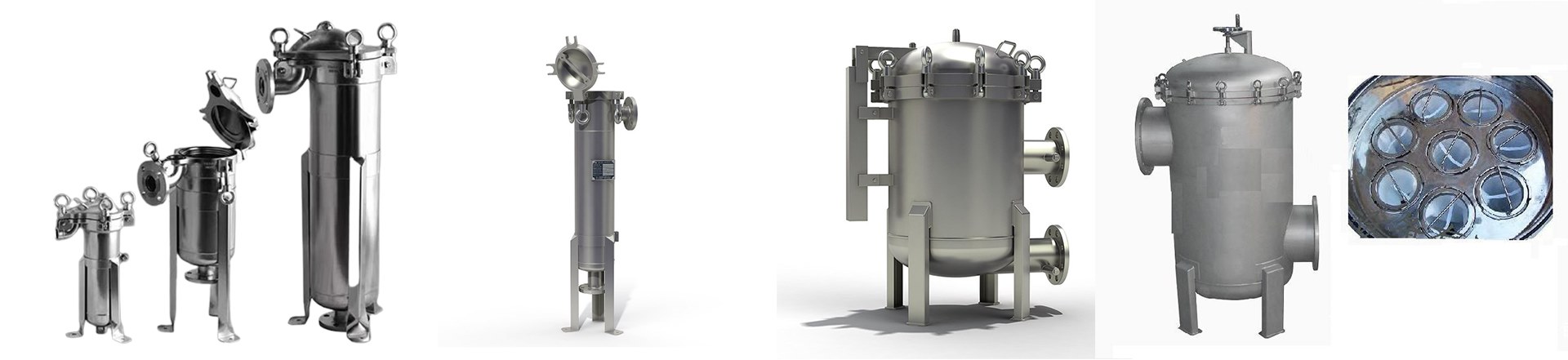
When selecting a bag filter housing, buyers often focus on flow rate, filter bag size, and filtration efficiency. However, the housing entry design can also influence sealing performance, maintenance requirements, and long-term operating costs.
The two most common configurations are top entry bag filter housings and side entry bag filter housings.
For a broader overview of bag filtration systems, see our Industrial Bag Filter Housing Guide. If filtration efficiency is also a concern, our Filter Bag Micron Ratings Explained guide can help determine the appropriate filtration rating for your application.
A top entry bag filter housing directs liquid into the vessel from the top and down through the filter bag.
One of its key advantages is the sealing mechanism. Process pressure helps keep the filter bag firmly seated against the sealing ring, reducing the possibility of liquid bypass.
Because of this pressure-assisted seal, top entry designs are often selected for applications where filtration integrity is critical.
Top entry housings are commonly used for:
• High-temperature fluids
• High-viscosity liquids
• Corrosive process media
• Fine chemical processing
• High-value product filtration
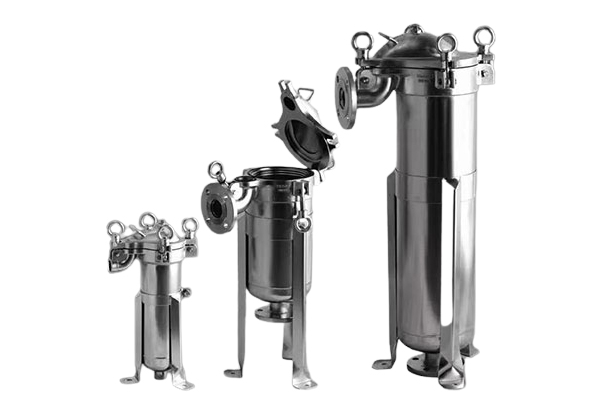
A side entry bag filter housing introduces liquid through an inlet positioned on the side of the vessel.
This design is widely used because it offers a compact structure, simple operation, and cost-effective performance.
Side entry housings are frequently found in single bag configurations and are often used in low- to medium-flow filtration systems where maximum sealing performance is not the primary requirement.
Typical applications include:
• Process water filtration
• Cooling water systems
• Pre-filtration processes
• General industrial liquid filtration
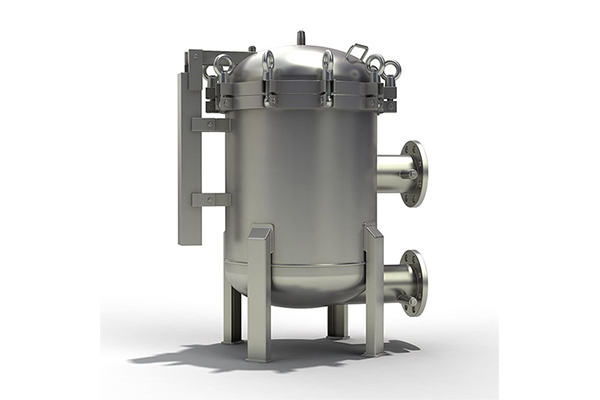
| Feature | Top Entry Housing | Side Entry Housing |
| Flow Direction | Top to Bottom | Side Inlet |
| Sealing Performance | Excellent | Good |
| Bypass Risk | Very Low | Low |
| Maintenance Access | Easy | Moderate |
| Initial Cost | Higher | Lower |
| Typical Configuration | Single or Multi Bag | Often Single Bag |
| Best Suited For | Critical Filtration | General Filtration |
Neither design is universally better. The best choice depends on process requirements.
Related Reading: Single Bag Filter Housing vs Multi Bag Filter Housing
The most important difference between the two designs is how the filter bag is sealed.
| Design | Sealing Method |
| Top Entry | Pressure-Assisted Positive Seal |
| Side Entry | Mechanical Seal System |
In a top entry housing, liquid pressure helps push the filter bag into the sealing seat, minimizing the risk of unfiltered liquid bypassing the filter media.
In a side entry housing, sealing performance depends more heavily on proper bag installation and the mechanical sealing arrangement.
For applications where product quality and filtration consistency are critical, top entry housings are often preferred.
Flow rate and available installation space should also be considered.
Side entry housings are typically more compact and economical, making them a practical choice for smaller systems.
Top entry housings may require a larger investment but can provide improved filtration reliability under demanding operating conditions.
The decision should be based on total system requirements rather than equipment cost alone.
Both designs are relatively easy to maintain.
Top entry housings provide direct access to the filter bag from above, which can simplify bag replacement and inspection.
Side entry housings also offer straightforward maintenance, although access requirements may vary depending on installation layout and cover design.
For systems requiring frequent bag changes, maintenance accessibility should be evaluated during equipment selection.
| Process Requirement | Recommended Design |
| High Filtration Integrity | Top Entry |
| High Temperature Fluids | Top Entry |
| High Viscosity Liquids | Top Entry |
| Corrosive Media | Top Entry |
| Compact Installation Space | Side Entry |
| Budget-Sensitive Projects | Side Entry |
| Low to Medium Flow Rates | Side Entry |
| General Industrial Filtration | Side Entry |
In most cases, process conditions are a more important selection factor than industry type.
Not every filtration system fits a standard design.
Custom bag filter housings can be engineered to meet specific flow rates, connection standards, pressure requirements, material specifications, and installation constraints.
Whether you require a top entry or side entry configuration, a customized design can help optimize filtration performance and simplify system integration.
1. Does a top entry housing always provide better filtration?
Not necessarily. Both designs can achieve effective filtration. However, top entry housings generally offer better sealing performance and a lower risk of liquid bypass.
2. Is a side entry housing suitable for industrial applications?
Yes. Side entry housings are widely used in industrial filtration systems and provide a practical, cost-effective solution for many applications.
3. Does entry design affect filter bag life?
The entry design itself does not directly determine bag life, but improved sealing and flow distribution may help maintain more consistent filtration performance.
4. Can both designs use the same filter bag micron ratings?
Yes. Filtration accuracy is determined primarily by the filter bag media and micron rating rather than the housing entry design.
| If Your Priority Is... | Recommended Choice |
| Maximum Sealing Performance | Top Entry |
| High Filtration Integrity | Top Entry |
| High Temperature or Viscous Fluids | Top Entry |
| Lower Initial Cost | Side Entry |
| Compact System Design | Side Entry |
| General Industrial Filtration | Side Entry |
Top entry and side entry bag filter housings use the same filtration principle but differ in sealing design, installation characteristics, and operating priorities.
Top entry housings are often selected when filtration integrity and sealing performance are critical, while side entry housings remain a practical and economical solution for many industrial filtration systems.
The most suitable choice depends on process conditions, maintenance requirements, and overall system objectives.
Reading More:
Step-by-Step to Choose the Right Bag Filter Housing
Bag Filter Housing for Water Treatment
Bag Filter Housing Components: 7 Parts That Determine Filtration Performance