Tel: +86 311 8595 5658 E-mail: admin@yuanlvfilter.com
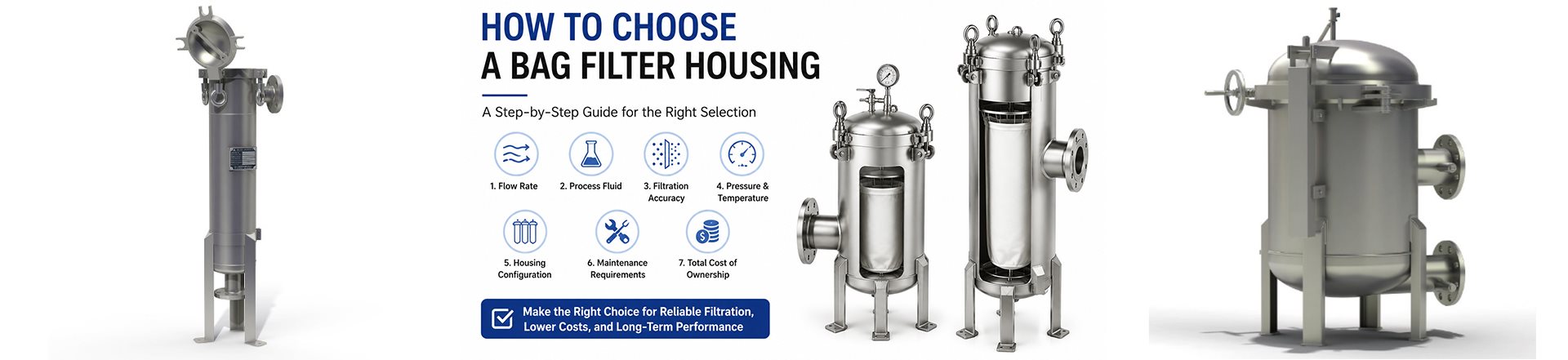
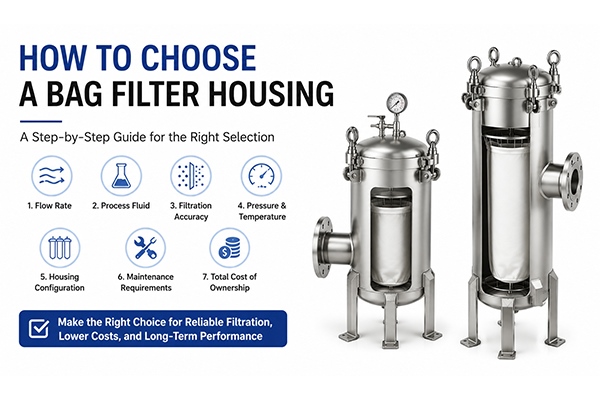
Choosing the right bag filter housing starts with understanding your process rather than selecting a product. Key factors include flow rate, fluid properties, filtration accuracy, operating pressure, housing configuration, maintenance requirements, and installation space. Evaluating these factors in a logical order helps improve filtration performance, reduce operating costs, and extend equipment service life.
For a broader overview of bag filtration systems, see our Industrial Bag Filter Housing Guide.
A bag filter housing is more than a container for a filter bag. It directly affects system reliability, maintenance efficiency, and operating costs.
An oversized housing may increase equipment investment unnecessarily, while an undersized or improperly configured system can lead to excessive pressure drop, frequent bag replacement, liquid bypass, and production downtime.
Instead of selecting housing based only on price or dimensions, begin with your process requirements.
Flow rate is usually the starting point when selecting a bag filter housing.
Smaller systems with relatively low flow rates often perform well with a single bag filter housing, while higher flow applications generally benefit from a multi bag filter housing, which provides a larger filtration area and longer operating cycles.
Your expected future production capacity should also be considered. Selecting equipment that allows room for expansion can reduce upgrade costs later.
Related Reading: Single Bag Filter Housing vs Multi Bag Filter Housing
The characteristics of the liquid being filtered have a major influence on housing selection.
| Process Factor | Why It Matters |
| Temperature | Determines suitable housing materials and seal compatibility |
| Viscosity | Influences flow resistance and pressure drop |
| Corrosiveness | Affects material selection and service life |
| Solid Loading | Impacts bag replacement frequency and operating cost |
Understanding these conditions helps ensure both reliable filtration performance and long equipment life.
The housing supports the filtration process, but the filter bag determines the actual filtration rating. After selecting the housing configuration, matching filter bags with your bag filter housing is essential for achieving reliable filtration performance.
Choosing the correct micron rating depends on the particle size that must be removed while maintaining the desired flow rate.
Selecting an unnecessarily fine filter bag may increase pressure drop and shorten bag life, while an overly coarse bag may not achieve the required filtration quality.
Related Reading: Filter Bag Micron Ratings Explained
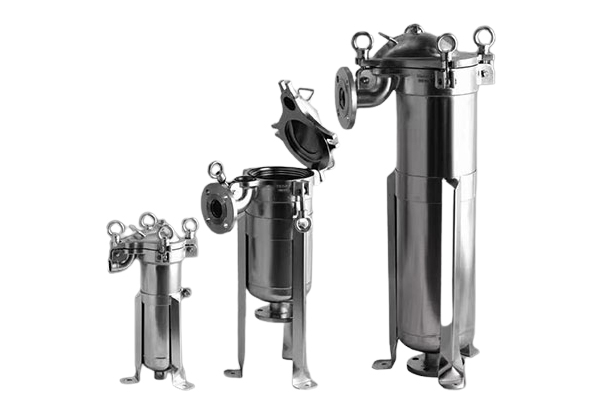
Once your process requirements are clear, select the housing configuration that best matches the application.
| Selection Priority | Recommended Option |
|---|---|
| Higher Flow Capacity | Multi Bag Housing |
| Better Bag Sealing | Top Entry Housing |
| Compact Installation | Side Entry Housing |
| Lower Initial Investment | Single Bag Housing |
Each design offers different advantages depending on your operating conditions.
For detailed comparisons, see our guides on Single Bag vs Multi Bag Filter Housing and Top Entry vs Side Entry Bag Filter Housing.
Every bag filter housing is designed to operate within specific pressure and temperature limits.
Before selecting bag filters, verify:
• Maximum operating pressure
• Design pressure
• Normal operating temperature
• Pressure fluctuations during operation
Choosing equipment that matches your actual process conditions improves both safety and service life.
Maintenance is often overlooked during equipment selection, yet it has a significant impact on long-term operating costs.
Ask the following questions:
• How often will filter bags be replaced?
• Is production downtime expensive?
• Is there sufficient space for maintenance?
• Can one operator safely replace the filter bag?
Selecting a housing that simplifies routine maintenance can reduce labor costs and improve production efficiency.
The lowest purchase price does not always provide the lowest operating cost.
When comparing bag filter housings, consider the total cost of ownership, including:
• Equipment investment
• Filter bag consumption
• Maintenance labor
• Production downtime
• Replacement frequency
• Expected service life
A housing that costs more initially may deliver lower operating costs over many years of continuous service.
Before making a final decision, confirm the following:
| Selection Checklist | Status |
|---|---|
| Flow rate confirmed | □ |
| Process fluid evaluated | □ |
| Micron rating selected | □ |
| Operating pressure verified | □ |
| Housing configuration determined | □ |
| Installation space confirmed | □ |
| Maintenance plan considered | □ |
Completing this checklist helps reduce selection errors and improves long-term filtration performance.
Standard bag filter housings may not always meet every process requirement.
At YuanLv, we provide custom bag filter housing solutions based on your operating conditions, including flow rate, pressure, connection type, vessel size, material selection, and installation requirements.
Whether you need a compact single bag housing or a customized multi bag filtration system, our engineering team can help develop a solution tailored to your application.
1. How do I know if I need a single or multi bag filter housing?
The decision mainly depends on your required flow rate, maintenance interval, and future production capacity. Higher flow applications generally benefit from multi bag housings.
2. Does the housing determine filtration accuracy?
No. Filtration accuracy is determined by the filter bag's micron rating. The housing primarily affects sealing performance, pressure resistance, and system reliability.
3. Should I choose a top entry or side entry bag filter housing?
Top entry housings generally provide better sealing performance and lower bypass risk, while side entry housings are often preferred for compact, cost-effective industrial filtration systems.
4. Can a bag filter housing be customized?
Yes. Customization options commonly include housing size, material, pressure rating, inlet and outlet connections, surface finish, and mounting configuration to meet specific process requirements.
Choosing the right bag filter housing is a step-by-step process rather than a simple product comparison. By evaluating flow rate, process fluid, filtration accuracy, housing configuration, operating conditions, maintenance strategy, and long-term operating costs, you can select a system that delivers reliable filtration and lasting value.
If you're unsure which configuration best fits your application, our engineering team can help evaluate your process requirements and recommend a customized bag filter housing solution.
Related Reading: