Tel: +86 311 8595 5658 E-mail: admin@yuanlvfilter.com
Wastewater treatment plants rely on mechanical screening systems to remove solids before biological or chemical processing. Two technologies are commonly compared: the DSM screen (also known as the wedge wire curved screen) and the rotary drum screen.
Although both serve the same purpose, their structures, flow patterns, and long-term performance differ significantly.
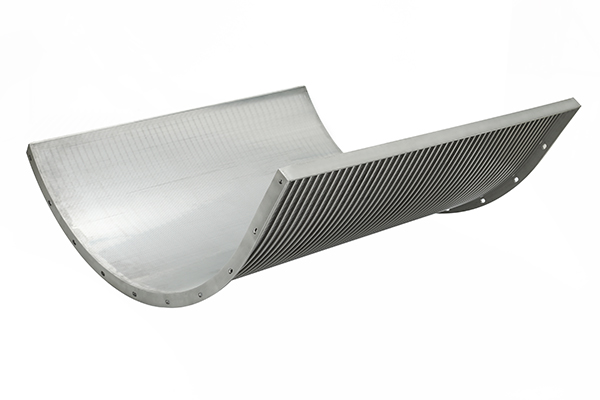
A DSM screen is a static, curved wedge-wire panel that separates solids by allowing water to pass through precise slots. The flow travels over the curved surface by gravity, spreading the liquid and accelerating solids removal.
Key characteristics include:
• No moving parts
• Low operating cost
• Fine, accurate slot sizes
• Stable performance even with variable influent flow
Because there are no motors, gears, or rotation mechanisms, DSM screens are noted for reliability and predictable long-term performance.
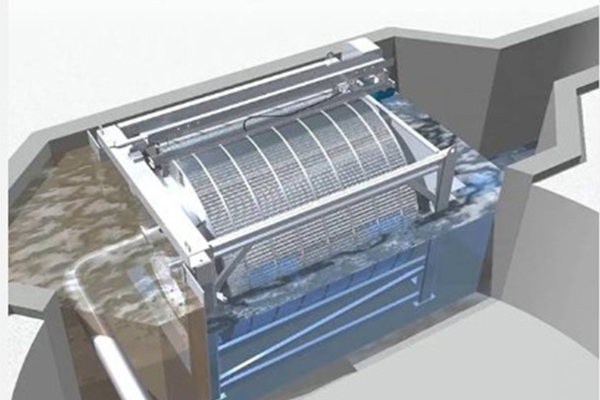
A rotary drum screen is a cylindrical screening device driven by an electric motor. Wastewater enters the drum, the drum rotates continuously, and internal or external sprays wash solids off the screen surface.
Main characteristics:
• Continuous rotation
• Integrated spray cleaning
• Suitable for higher flow rates
• Uniform screening surface around the drum
Rotary drums are often chosen when plants require automated cleaning or when influent contains high levels of organic material.
A. Mechanical Complexity
• DSM Screen: No moving parts → minimal wear and low maintenance
• Rotary Drum: Motor, drive chains, spray nozzles → higher maintenance demand
B. Energy Consumption
• DSM Screen: Zero operational energy
• Rotary Drum: Requires power for rotation + spray washing
C. Slot Accuracy
• DSM Screen: High precision wedge-wire slots (0.2–1.0 mm), stable over time
• Rotary Drum: Accuracy varies depending on mesh or wedge-wire build
D. Footprint
• DSM Screen: Compact, gravity-fed
• Rotary Drum: Larger footprint due to motor, gearbox, and enclosure
These differences influence long-term cost, performance consistency, and system reliability.
A. Solids Removal Efficiency
• DSM Screen: Efficient for fine solids. The curved surface accelerates water over the wedge wire, improving separation.
• Rotary Drum: Performs well with medium-sized solids and organic materials. The rotating action exposes all screen areas to wastewater.
For fine solids and stable slot control, DSM screens are superior. For mixed solids and organic materials, rotary drums can perform better.
B. Clogging and Cleaning Behavior
• DSM Screen:
Self-cleaning due to V-shaped profile
Flushes solids downward naturally
No spray bars required
• Rotary Drum:
Spray bars are necessary to prevent fouling
Regular nozzle cleaning is required
Higher risk of biological buildup
DSM screens clog far less frequently and require less operator intervention.
C. Flow Rate and Capacity
• DSM Screen: Best for moderate or fluctuating flows.
• Rotary Drum: Designed to handle higher continuous flows.
For large treatment plants targeting consistent high throughput, rotary drums are preferred.
D. Lifespan and Maintenance
Estimated service life in municipal wastewater:
| Component | DSM Screen | Rotary Drum Screen |
|---|---|---|
| Screen Panel | 8–12 years | 5–8 years |
| Mechanisms | None | Motor + gearbox (replacement every 3–5 yrs) |
| Cleaning System | Not required | Spray bars and pump maintenance |
DSM screens typically last longer and cost less to maintain over time.
E. Operating Cost
Costs considered: power usage, cleaning, labor, and spare parts.
| Category | DSM Screen | Rotary Drum Screen |
|---|---|---|
| Energy Cost | Very low | Moderate to high |
| Maintenance | Minimal | Regular mechanical upkeep |
| Total Cost Over 10 Years | Lowest | Higher due to parts and labor |
DSM screens offer the lowest 10-year operating cost.
✔ Choose a DSM Screen if your priority is:
Low maintenance
Zero energy use
Accurate slot openings
Reduced clogging
Lower lifecycle cost
Long service life
✔ Choose a Rotary Drum Screen if your priority is:
High throughput
Fully automated washing
Handling mixed organic solids
Integration into large municipal systems
In wastewater treatment, DSM screens provide better long-term reliability, lower energy consumption, and more stable performance, while rotary drum screens are suitable for continuous high-flow environments that require automated cleaning.
In a municipal wastewater plant study comparing both technologies over 18 months:
DSM screens reduced maintenance hours by 42%
Rotary drums consumed 8–12 kWh per day on average
DSM screens maintained over 90% slot accuracy with no mechanical failure
These findings mirror the experience of many operators who prioritize simplicity and uptime.
Johnson Wedge Wire manufactures DSM screens using 316L or duplex stainless steel, ensuring corrosion resistance and stable slot geometry. Each screen is welded and inspected to meet international quality standards for wastewater filtration.
Frequently Asked Questions (FAQ)
1. What slot size is most common for wastewater DSM screens?
Typical slot sizes range from 0.25 mm to 1.0 mm, depending on influent solids and treatment goals.
2. Can DSM screens replace rotary drum screens?
Yes, especially in small to medium wastewater plants where energy savings and low maintenance are priorities.
3. Do rotary drum screens last as long as DSM screens?
The screen surface may last 5–8 years, but motors and spray systems often require earlier replacement.
4. Which option is more cost-effective over time?
DSM screens are generally more cost-effective due to zero energy use and fewer replacement parts.
5. Are DSM screens suitable for industrial wastewater?
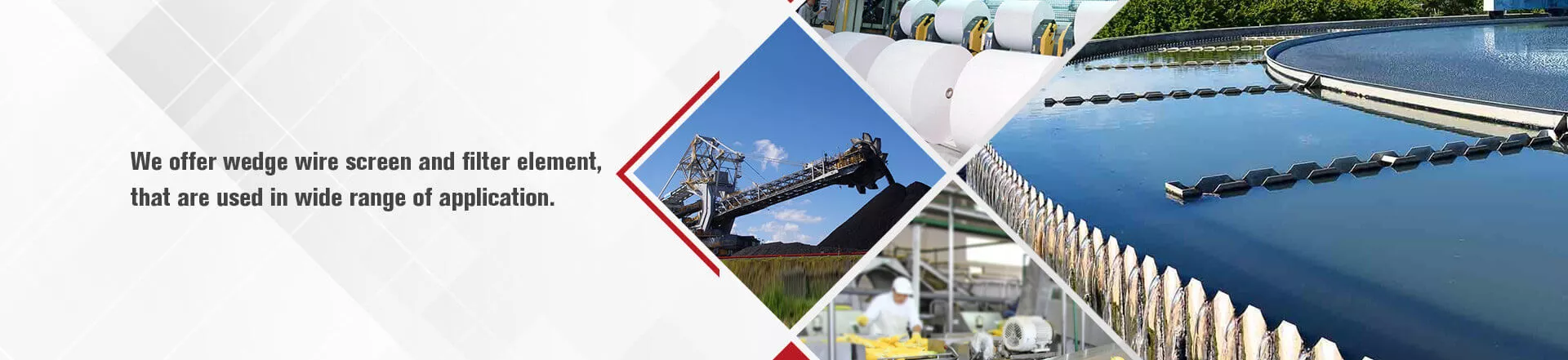
Yes. Industries such as food processing, pulp and paper, and mining frequently use DSM screens for primary solids removal.