Tel: +86 311 8595 5658 E-mail: admin@yuanlvfilter.com
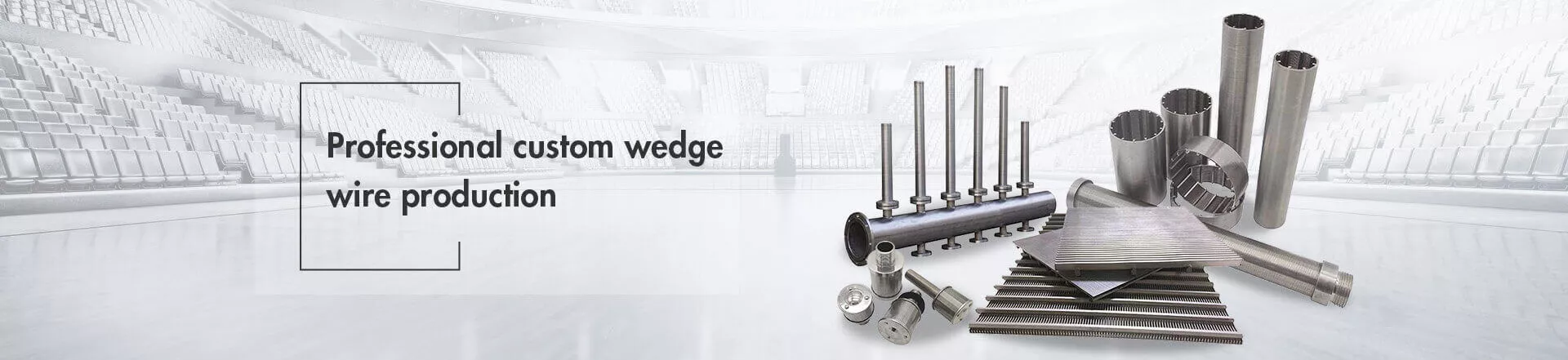
Wedge wire resin traps and underdrain nozzles serve different but complementary roles in ion exchange systems. Underdrain nozzles are vessel internals designed for flow distribution and resin bed support, while wedge wire resin traps are downstream safety devices that capture escaped resin beads. Using both components together provides layered protection against resin loss, downstream equipment damage, and operational failure.
Ion exchange performance depends on the physical containment and stability of resin beads. Resin loss can lead to:
• Reduced ion exchange capacity
• Fouling or blockage of downstream equipment
• Damage to pumps, valves, membranes, and instruments
• Increased operating and maintenance costs
Because resin loss events are often sudden and difficult to predict, system protection relies on both internal design control and external safety measures.
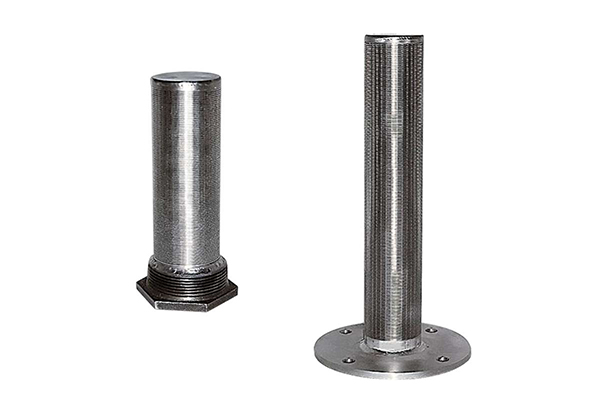
A wedge wire resin trap is a precision filtration component installed downstream of an ion exchange vessel to retain resin beads that escape due to internal failure or abnormal operating conditions.
✔ Functional Principle
Constructed using V-shaped (wedge) wire profiles
Slot openings are precisely controlled and smaller than the resin bead diameter
Flow direction widens through the slot, reducing blinding and pressure buildup
Functions independently of vessel hydraulics
✔ Typical Product Specifications
Slot opening: 0.2–0.5 mm (matched to resin size)
Material: SS 304, SS 316, duplex stainless steel
Construction: Fully welded wedge wire screen
Operating pressure: Designed for system line pressure
Installation: Outlet piping, header laterals, collector lines
✔ Primary Role
Capture escaped resin beads
Protect downstream process equipment
Act as a fail-safe resin retention layer
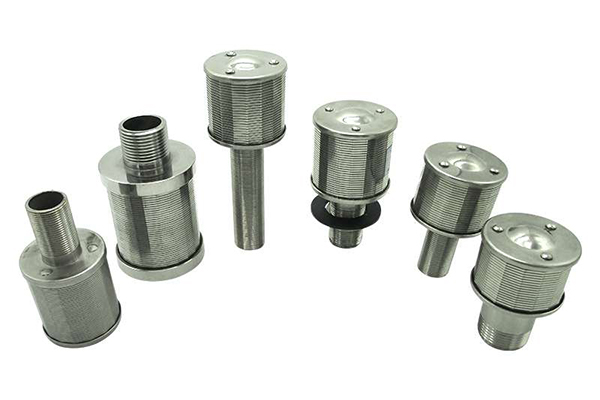
An underdrain nozzle is a vessel internal component installed at the bottom of an ion exchange column to support the resin bed and distribute flow evenly.
✔ Functional Principle
Mounted on underdrain headers or false floors
Allows water to pass while retaining resin within the vessel
Ensures uniform flow during service and regeneration
Enables effective backwashing without resin loss under normal conditions
✔ Typical Product Specifications
Slot opening: Selected to retain resin during normal operation
Flow rate per nozzle: Engineered for hydraulic balance
Material: SS 304, SS 316, engineered polymers
Functionality: Flow distribution, not downstream filtration
✔ Primary Role
Support resin bed
Maintain hydraulic balance
Improve backwash efficiency
| Aspect | Wedge Wire Resin Trap | Underdrain Nozzle |
|---|---|---|
| System position | Downstream piping | Vessel bottom |
| Core function | Resin capture | Flow distribution |
| Protects downstream equipment | Yes | No |
| Designed for resin loss events | Yes | No |
| Hydraulic control | Minimal | Primary |
| Fail-safe capability | Yes | No |
Underdrain nozzles manage normal operation, while resin traps protect against abnormal or failure scenarios.
Underdrain nozzles reduce resin movement but cannot fully prevent resin escape. Resin loss can occur due to:
• Nozzle breakage or deformation
• Excessive backwash velocity
• Resin attrition and size reduction
• Header or collector damage
• Installation or design errors
Once resin passes the underdrain layer, only a downstream retention device can stop it.
1. Redundant Protection Strategy
Modern ion exchange systems increasingly use layered protection:
• Internal control: underdrain nozzles
• External safety: wedge wire resin traps
This approach aligns with risk-based engineering practices.
2. Predictable Retention Performance
Precision wedge wire manufacturing ensures:
• Consistent slot geometry
• Stable pressure drop
• High open area with low clogging tendency
3. Long-Term Durability
Metal wedge wire resin traps offer:
• High mechanical strength
• Resistance to chemical cleaning
• Long service life in continuous operation
Wedge wire resin traps are commonly specified in:
• Power plant demineralization systems
• Boiler feedwater ion exchange units
• Mixed-bed polishers
• Pharmaceutical purified water systems
• Chemical processing plants
• Ultrapure and high-reliability water treatment systems
Any system where resin carryover poses operational or safety risks benefits from the installation of a resin trap.
✔ Use Underdrain Nozzles When:
• Designing or upgrading vessel internals
• Optimizing flow distribution and backwash
• Supporting resin beds under normal operation
✔ Use Wedge Wire Resin Traps When:
• Protecting downstream equipment
• Adding redundancy to critical systems
• Retrofitting existing ion exchange units
• Addressing historical resin carryover incidents
Engineering best practice:
Underdrain nozzles and resin traps should be used together, not as alternatives.
FAQ
1. What is the difference between a resin trap and an underdrain nozzle?
An underdrain nozzle supports resin and distributes flow inside the vessel, while a resin trap captures escaped resin downstream.
2. Are wedge wire resin traps clog-resistant?
Yes. The wedge-shaped slot geometry minimizes blinding and maintains flow stability.
3. Do all ion exchange systems need resin traps?
Systems with high reliability requirements or sensitive downstream equipment typically benefit from resin trap installation.
Wedge wire resin traps and underdrain nozzles address different risk points in ion exchange systems.
Underdrain nozzles ensure stable hydraulic operation, while wedge wire resin traps provide critical downstream protection against resin loss.
Combining both components delivers a robust, engineered solution that improves system reliability, protects equipment, and supports long-term operational performance.