Tel: +86 311 8595 5658 E-mail: admin@yuanlvfilter.com
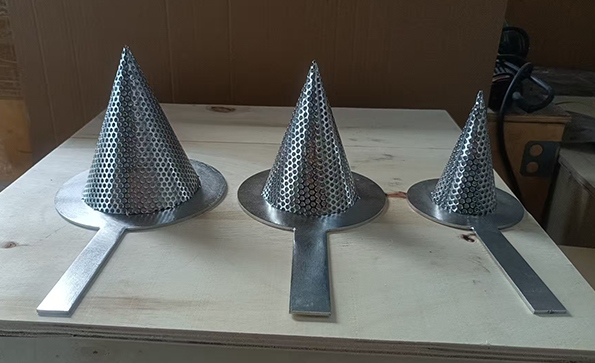
Temporary pipeline strainers are short-term filtration devices installed in pipelines to protect pumps and downstream equipment during commissioning, startup, flushing, or maintenance. They remove debris such as welding slag, rust, scale, and solid particles, helping prevent pump damage, blockage, and unplanned shutdowns before permanent filtration systems are put into service.
A temporary pipeline strainer is a removable filtration component placed in a pipeline for a limited period of operation. Unlike permanent strainers, it is designed for startup and transitional phases, where contamination risk is highest.
Temporary strainers are commonly installed:
• Upstream of pumps
• At suction or discharge lines
• During system flushing and cleaning
• Before commissioning new pipelines or equipment
Once the system is clean and stable, the temporary strainer is removed or replaced with a permanent strainer.
How do temporary strainers protect pumps?
Pumps are highly sensitive to solid contaminants. Temporary strainers act as a first line of defense, capturing debris before it enters the pump and causes:
• Impeller damage
• Seal failure
• Excessive vibration
• Reduced flow or cavitation
Using a temporary pump strainer significantly reduces early-stage equipment failure and extends pump service life.
Temporary pipeline strainers are widely used across industrial sectors:
• Pump startup protection in water and wastewater systems
• Pipeline flushing and cleaning operations
• Commissioning of oil & gas pipelines
• Chemical processing and transfer lines
• Cooling water systems in power plants
• Marine and offshore piping systems
In all cases, the goal is the same: remove construction debris and solids before normal operation begins.
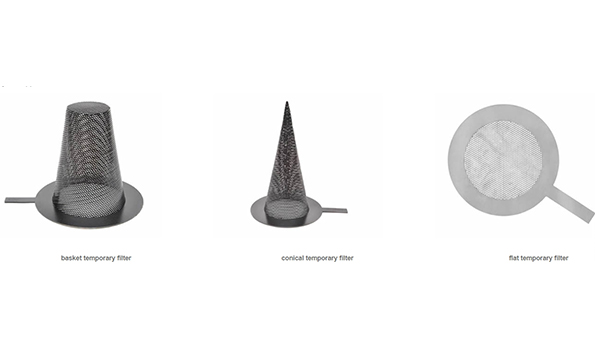
1. Cone Type Temporary Strainer
Installed between flanges
High debris-holding capacity
Common for pump suction lines
2. Basket Type Temporary Strainer
Used where higher flow rates are required
Easier to remove and clean
Suitable for repeated short-term use
3. Flat or Plate Type Temporary Strainer
Simple design
Lower pressure drop
Used in low-debris applications
Each design can be customized to meet flow-rate, pressure, and contamination-level requirements.
When selecting a temporary pipeline strainer, engineers typically evaluate:
• Mesh size (coarse or fine filtration)
• Flow capacity and pressure drop
• Debris load during flushing
• Operating pressure and temperature
A well-designed temporary filtration strainer balances effective debris removal with minimal flow restriction.
Temporary pipeline strainers are commonly manufactured from:
• Stainless steel (corrosion resistance, reusability)
• Carbon steel (cost-effective for short-term use)
• Wire mesh or perforated plate
Material selection depends on the process fluid, operating conditions, and project duration.
| Feature | Temporary Pipeline Strainer | Permanent Strainer |
|---|---|---|
| Intended use | Short-term / startup | Long-term operation |
| Installation | Quick, removable | Fixed |
| Debris load | High (construction debris) | Normal operating solids |
| Maintenance | Removed after use | Cleaned periodically |
Temporary strainers are not a replacement for permanent filtration but a complementary safety measure during high-risk phases.
A temporary pipeline strainer should be removed when:
• Flushing and commissioning are complete
• Differential pressure stabilizes
• No visible debris is collected during inspection
Leaving a temporary strainer in service longer than intended may cause unnecessary pressure loss.
• Install upstream of critical equipment
• Monitor pressure drop during operation
• Inspect and clean during flushing cycles
• Remove promptly after system stabilization
These steps ensure reliable pump protection without compromising system efficiency.
Frequently Asked Questions
1. What is a temporary pipeline strainer used for?
It is used to remove debris during startup, commissioning, and flushing to protect pumps and downstream equipment.
2. Are temporary pipeline strainers reusable?
Yes. Many stainless steel temporary strainers can be cleaned and reused, depending on their design and condition.
3. What mesh size is typical for temporary strainers?
Mesh size varies by application, but coarse filtration is commonly used to capture construction debris without excessive pressure drop.
4. Can a temporary strainer replace a permanent strainer?
No. Temporary strainers are designed for short-term protection and should be removed once normal operation begins.
Temporary pipeline strainers play a critical role in pumping and filtration solutions, especially during system startup and commissioning. By capturing debris before it reaches sensitive equipment, they reduce operational risk, prevent pump damage, and support smooth system handover. When properly selected and applied, temporary strainers provide reliable, cost-effective protection without long-term complexity.