Tel: +86 311 8595 5658 E-mail: admin@yuanlvfilter.com
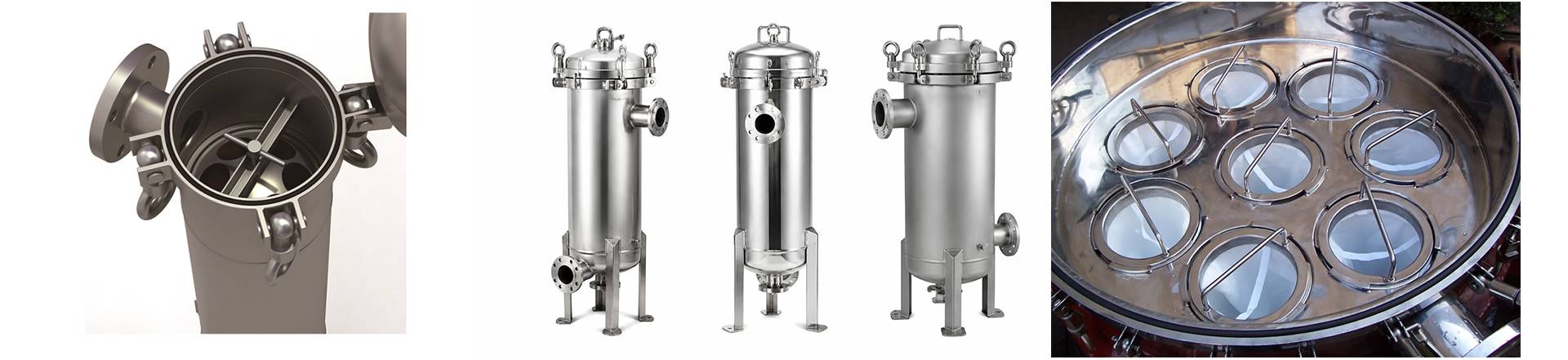
The material of a bag filter housing directly affects corrosion resistance, mechanical strength, maintenance requirements, and service life. Selecting the right material requires considering the characteristics of the process liquid, operating temperature, pressure conditions, and the environment where the equipment will be installed.
For industrial filtration systems, stainless steel and carbon steel are the most commonly used housing materials. Each material has different advantages depending on the operating conditions.
Material selection is only one part of designing an efficient filtration system. For a complete overview of bag filter housing types, working principles, and selection considerations, refer to our industrial bag filter housing guide.
A bag filter housing operates under continuous contact with process fluids and pressure conditions. If the selected material cannot withstand the operating environment, problems such as corrosion, leakage, reduced service life, or frequent maintenance may occur.
Material selection is not only about the initial equipment cost. The fabrication quality, corrosion resistance, and long-term durability of the housing also influence the overall operating cost of the filtration system.
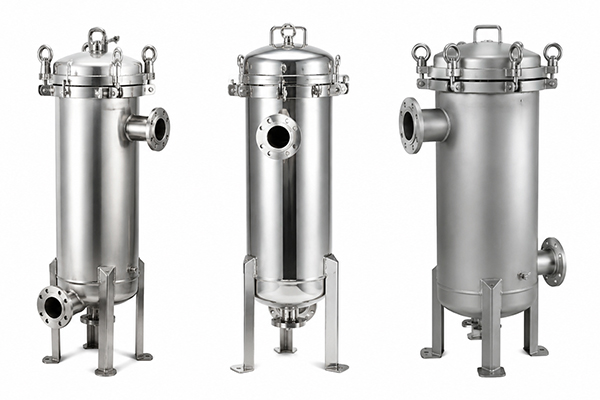
Stainless Steel Bag Filter Housing
Stainless steel is the most widely used material for industrial bag filter housings because it provides good corrosion resistance, mechanical strength, and compatibility with various liquid filtration applications.
Common stainless steel grades include 304, 316, and 316L.
304 stainless steel is a common choice for general industrial filtration applications.
Key characteristics:
Good corrosion resistance
Strong mechanical performance
Suitable for many water-based and industrial liquids
More economical compared with higher alloy materials
304 stainless steel is often selected when the process fluid does not contain highly corrosive components.
316 and 316L stainless steel provide improved corrosion resistance compared with 304, especially in environments containing chlorides or more aggressive chemicals.
Key characteristics:
Higher resistance to corrosion
Better performance in demanding chemical environments
Suitable for applications requiring enhanced durability
316L is also widely used in fabricated equipment because its lower carbon content helps maintain corrosion resistance after welding.
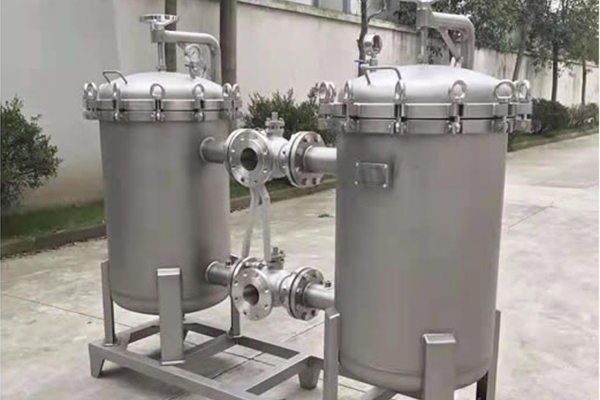
Carbon steel provides high mechanical strength and is a practical option for applications where corrosion resistance is not the primary concern.
Advantages include:
High structural strength
Cost efficiency
Suitable for general industrial conditions
For carbon steel housings, additional surface protection or coatings may be considered depending on the operating environment.
| Feature | Stainless Steel 304 | Stainless Steel 316, 316L |
|---|---|---|
| Corrosion Resistance | Good | Higher |
| Chloride Resistance | Moderate | Better |
| Chemical Compatibility | General industrial fluids | More demanding chemical environments |
| Cost | Lower | Higher |
| Typical Selection | Standard filtration conditions | More corrosive operating conditions |
The choice between 304 and 316, 316L depends on the actual process conditions rather than simply selecting the higher grade material. In many applications, 304 provides sufficient performance, while 316 and 316L are preferred where additional corrosion resistance is required.
1. Fluid Compatibility
The process liquid is one of the most important factors when selecting housing material.
Liquids containing salts, acids, chemicals, or corrosive substances may require stainless steel grades with higher corrosion resistance.
2. Operating Temperature
Temperature affects the mechanical properties of materials and sealing performance.
High-temperature applications require careful evaluation of both housing material and internal sealing components.
3. Operating Pressure
The housing material must provide sufficient strength for the system pressure.
Higher pressure applications may require stronger construction, appropriate wall thickness, and reliable fabrication methods.
Material selection should also be considered together with overall housing configuration, flow requirements, and operating conditions. Our guide on how to choose a bag filter housing provides a broader selection approach.
4. Cleaning and Maintenance Requirements
Frequent cleaning, replacement, or chemical cleaning procedures can influence material selection.
A material with better corrosion resistance may reduce maintenance requirements and extend equipment service life.
For a bag filter housing manufacturer, material selection is closely connected with fabrication quality.
Different materials require different welding processes, surface treatments, and quality controls. These manufacturing considerations are closely related to the design and construction of each housing component. Learn more about bag filter housing components and their functions.
For example, stainless steel housings require proper welding techniques and surface finishing to maintain corrosion resistance after fabrication. Accurate machining of sealing areas is also important to ensure reliable operation and prevent liquid bypass.
These manufacturing details directly affect the performance of the finished filtration equipment.
Standard stainless steel and carbon steel configurations meet many industrial requirements, but some applications require customized solutions.
YuanLv Filter provides customized bag filter housing manufacturing based on:
Material grade selection
Pressure requirements
Connection type
Surface finish requirements
Equipment dimensions
Customized fabrication allows the housing design to match specific process conditions and installation requirements.
1. What is the best material for a bag filter housing?
There is no single material suitable for every application. Stainless steel 304, 316/316L, and carbon steel each have different advantages depending on corrosion conditions, temperature, and pressure requirements.
2. Is 316 stainless steel better than 304?
316 stainless steel provides higher corrosion resistance, especially in chloride-containing or more aggressive environments. However, 304 may be suitable for many general industrial applications.
3. Does temperature affect bag filter housing material selection?
Yes. Operating temperature can influence material strength, corrosion behavior, and sealing performance.
The correct bag filter housing material depends on the relationship between the process fluid, operating conditions, and equipment requirements. Stainless steel 304, 316, 316L, and carbon steel each provide different advantages for industrial filtration applications.
For manufacturers, material selection is only one part of the process. Proper fabrication, welding, and finishing are equally important factors that determine the reliability and service life of the final filtration equipment.