Tel: +86 311 8595 5658 E-mail: admin@yuanlvfilter.com
Selecting the right screening equipment is a foundational decision in any solid–liquid separation system. Among gravity-based screening solutions, DSM screens and wedge wire panels are often compared because they share similar construction principles but serve different process objectives.
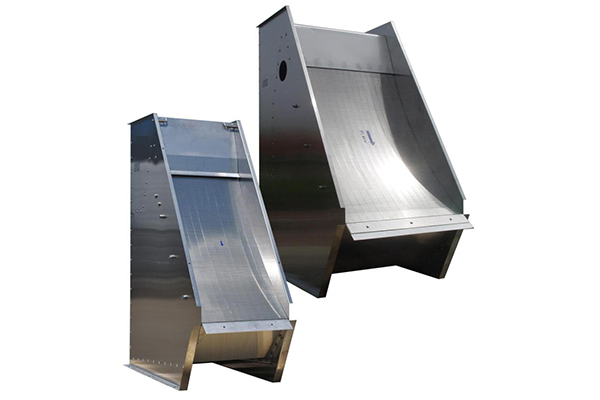
A DSM screen, also known as a static wedge wire screen, is a gravity-fed screening device designed for continuous solid–liquid separation without moving parts.
• Influent flows by gravity onto an inclined wedge wire surface
• Liquid passes through precision slot openings
• Solids are retained and move downward by gravity
• Separated solids discharge automatically at the screen's lower edge
DSM screens rely on hydraulic energy rather than mechanical motion, which makes them energy-efficient and operationally stable.
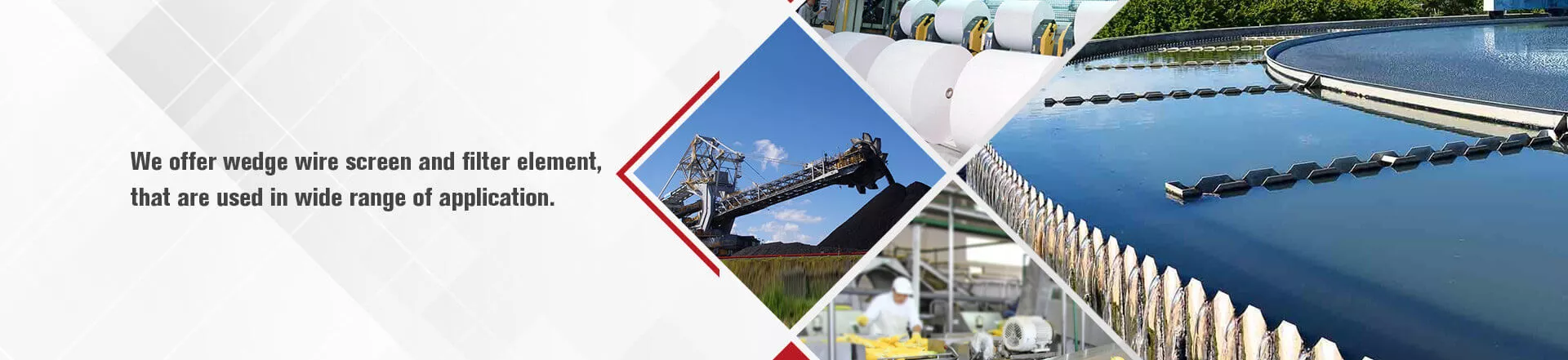
• Wastewater primary screening
• Sludge thickening and dewatering
• Food and beverage processing
• Pulp and paper effluent treatment
• Industrial process water reuse
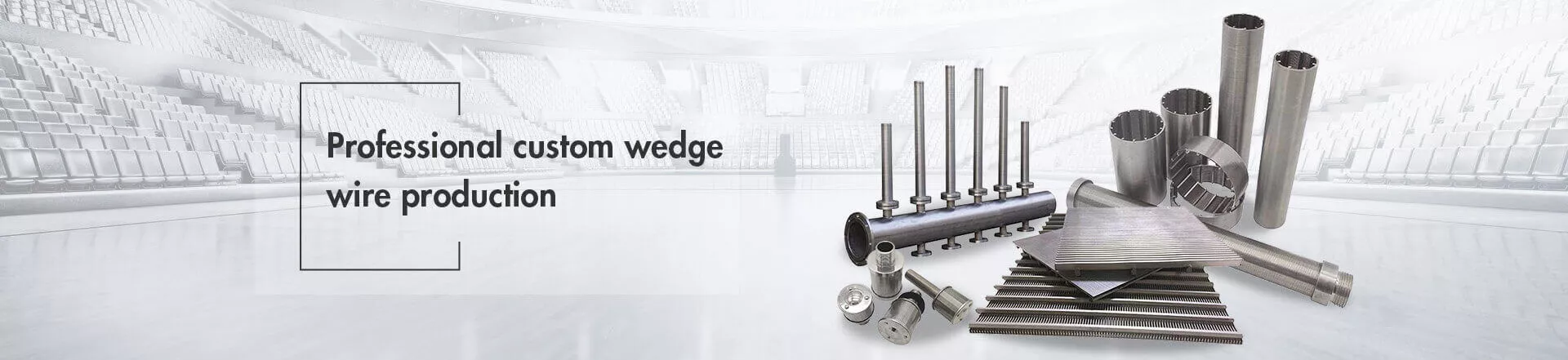
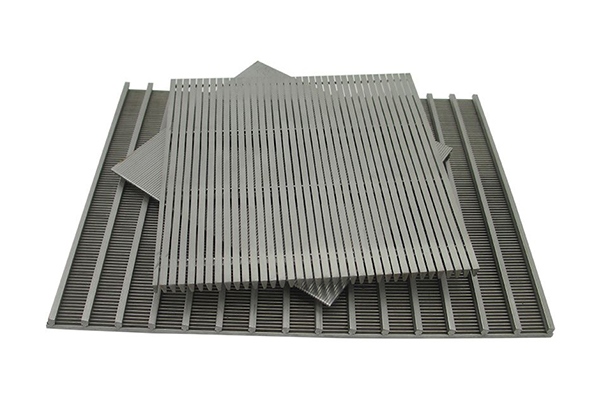
A wedge wire panel is a flat or curved screening surface manufactured from V-shaped (Vee wire) profiles resistance-welded to support rods. Unlike DSM screens, wedge wire panels are components, not complete screening units.
• Installed in custom frames or housings
• Integrated into channels, vessels, or mechanical screens
• Used in horizontal, vertical, or inclined configurations
• Applied in gravity-fed or pressure-driven systems
• Custom process flow screening
• Reactor internals and support grids
• Intake screens and filtration panels
• Industrial screening retrofits
• OEM filtration equipment
| Feature | DSM Screen | Wedge Wire Panel |
|---|---|---|
| Product Type | Complete static screen unit | Modular screening component |
| Installation | Standalone, gravity-fed | Integrated into custom systems |
| Process Flexibility | Fixed geometry | Highly customizable |
| Energy Use | Energy-free | Depends on system design |
| Maintenance | Very low | Depends on application |
| Best Use Case | Continuous gravity screening | Custom or complex process flow |
The answer depends on how your process flow behaves, not on which product is better in isolation.
✔ Choose a DSM Screen When:
• The system is gravity-fed
• The flow rate is relatively stable
• Primary solids removal is required
• Simplicity and low maintenance are priorities
• Space allows for inclined installation
DSM screens are particularly effective when process reliability and minimal operator intervention are critical.
✔ Choose a Wedge Wire Panel When:
• The process requires custom geometry
• Space or layout constraints exist
• The screen must integrate with other equipment
• Pressure or variable flow conditions are present
• OEM or retrofit designs are involved
Wedge wire panels offer maximum design flexibility, making them suitable for complex industrial systems.
Both DSM screens and wedge wire panels rely on precision slot openings, typically ranging from 0.25 mm to 3.0 mm, depending on the application.
• V-shaped profiles reduce clogging
• Narrow openings face the flow, wider openings face away
• Solids are retained on the surface, not trapped inside
• High open area improves hydraulic capacity
Correct slot size selection is more important than screen type when separation efficiency is the primary goal.
Most DSM screens and wedge wire panels are manufactured from stainless steel, commonly:
• SS304 for general industrial use
• SS316 and SS316L for corrosive or chloride-rich environments
Material choice affects:
• Corrosion resistance
• Service life
• Cleanability
• Compliance with food or chemical standards
• No moving parts
• No external power required
• Minimal wear components
• Easy wash-down cleaning
• Maintenance depends on installation
• Panels may be removable or fixed
• Cleaning method varies by system design
• Long service life when properly supported
In both cases, the non-clogging wedge wire design reduces downtime compared to perforated or mesh screens.
Choose based on process requirements, not product popularity.
If you need simple, gravity-driven, continuous screening, a DSM screen is the most efficient choice.
If your system demands custom flow paths, pressure operation, or integration, a wedge wire panel offers superior adaptability.
Both technologies are proven, durable, and widely adopted across water, wastewater, and industrial process applications.
Common Selection Questions
1. Is a DSM screen the same as a wedge wire screen?
A DSM screen uses wedge wire construction, but it is a complete static screening device, while a wedge wire panel is a screening component used in custom systems.
2. Which is better for wastewater treatment?
DSM screens are widely used for primary wastewater screening, while wedge wire panels are often used in secondary or custom filtration stages.
3. Can wedge wire panels replace DSM screens?
Only when the system is redesigned, a wedge wire panel alone does not replicate the hydraulic behavior of a DSM screen without proper geometry and flow control.
4. Which option offers more customization?
Wedge wire panels offer greater flexibility in terms of size, curvature, slot configuration, and integration.
DSM screens and wedge wire panels are not competing technologies; they are complementary tools within modern solid–liquid separation systems. Understanding their structural differences, hydraulic behavior, and integration requirements allows engineers and operators to make reliable, long-term process decisions.
Choosing correctly improves separation efficiency, reduces maintenance, and stabilizes process flow across a wide range of industrial environments.