Tel: +86 311 8595 5658 E-mail: admin@yuanlvfilter.com
Centrifuge baskets play a critical role in coal preparation plants, where efficient dewatering directly impacts product quality, transport cost, and plant productivity.
For a complete technical guide, visit our → Centrifuge Basket Engineering Guide
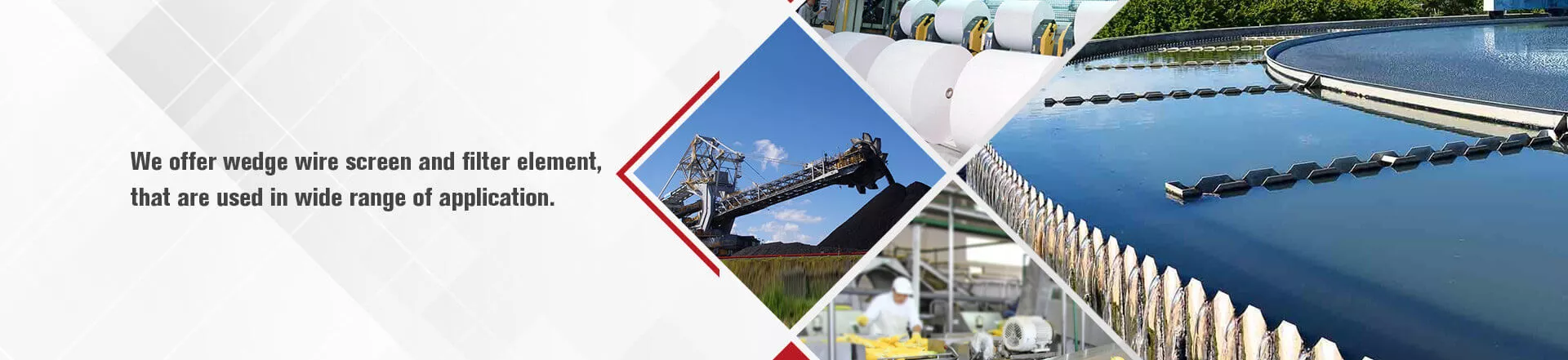
In modern coal preparation plants, centrifuge basketsare used to remove surface moisture from clean coal after washing.
The process involves:
• Feeding wet coal into a high-speed rotating basket
• Using centrifugal force to separate water from solids
• Discharging dewatered coal with reduced moisture content
Centrifuge baskets enable continuous coal dewatering by combining centrifugal force with precision screening.
Why Dewatering Matters
• Reduces transportation cost
• Improves calorific value
• Enhances downstream handling efficiency
Wedge wire centrifuge basketsare widely preferred over perforated plate designs in coal applications.
Wedge wire baskets are widely used in coal dewatering due to their high open area and anti-clogging design.
Key Advantages
| Feature | Benefit |
|---|---|
| V-shaped slot | Prevents clogging |
| Continuous opening | Stable separation |
| High open area (20–40%) | Increased throughput |
| Strong welded structure | Longer service life |
Wedge Wire vs Perforated Plate
• Better drainage efficiency
• Reduced blinding
• More precise separation
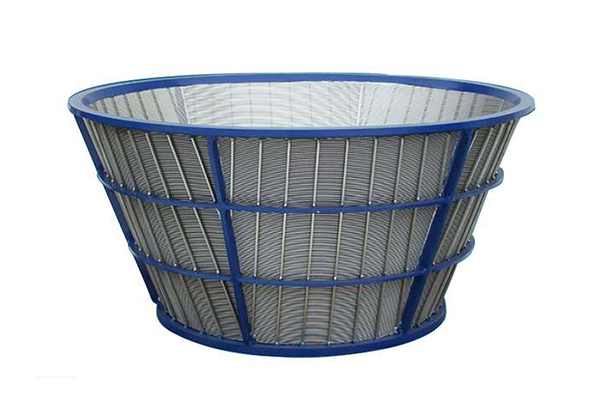
Slot size is the most important parameter affecting centrifuge basket performance.
In-depth: Centrifuge Basket Slot Size Selection Guide
1. Typical Slot Size Range
Standard Engineering Range:
0.30 – 0.50 mm for most coal dewatering applications
The typical slot size for coal dewatering ranges from 0.3 to 0.5 mm.
2. How Slot Size Affects Performance
| Slot Size | Effect |
|---|---|
| Smaller slot | Higher retention, lower throughput |
| Larger slot | Higher throughput, lower separation accuracy |
3. Selection Based on Coal Characteristics
Engineers must consider:
• Particle size distribution
• Desired moisture content
• Feed rate
• Centrifuge RPM
A well-designed basket improves both efficiency and lifespan.
1. Basket Geometry
Cylindrical baskets → stable performance
Conical baskets → improved discharge
For a detailed comparison, see → Cylindrical vs Conical Centrifuge Baskets
2. Structural Strength
• Reinforced support rods
• High-precision welding
3. Open Area Optimization
Higher open area increases dewatering efficiency, but must be balanced with structural strength.
4. Material Selection
• SS304 → general use
• SS316L → corrosion resistance
• Duplex → high wear resistance
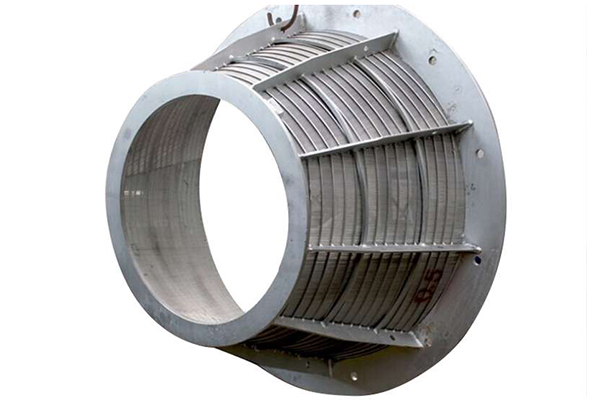
Coal processing environments are highly demanding.
1. Screen Clogging
Caused by fine particles
Leads to reduced efficiency
Solution: wedge wire structure
2. Abrasive Wear
Coal particles cause surface wear
Reduces service life
3. High Moisture Content
Improper slot size
Low open area
Improper slot size and material selection are the primary causes of poor dewatering performance.
To achieve optimal results:
✔ Select the Correct Slot Size
(0.3–0.5 mm for coal)
✔ Use High Open Area Design
(20–40%)
✔ Choose Wear-Resistant Materials
✔ Match Basket to Centrifuge Speed
Proper engineering design can significantly improve dewatering efficiency and reduce operating costs.
In a typical coal preparation plant:
Switching from a perforated plate to a wedge wire basket
Optimizing slot size from 0.75 mm → 0.4 mm
Resulted in:
• Lower product moisture
• Increased throughput
• Reduced maintenance frequency
Click here to see → Coal Dewatering Case Study: Improving Efficiency with Wedge Wire Centrifuge Baskets
Engineer Checklist
✔ Slot size (0.3–0.5 mm)
✔ Basket type (cylindrical or conical)
✔ Material (based on wear conditions)
✔ Open area
✔ Feed characteristics
In-Depth → Custom Filter Baskets
Centrifuge baskets are essential for efficient coal dewatering.
By selecting the right slot size, material, and design, engineers can significantly improve plant performance, reduce maintenance, and lower operational costs.
Wedge wire centrifuge baskets provide superior performance in coal dewatering due to their high open area, anti-clogging design, and durability.
1. What is a centrifuge basket used for in coal processing?
A centrifuge basket is used for solid-liquid separation in coal preparation plants. It removes surface moisture from coal slurry using centrifugal force, typically achieving 80–95% water removal efficiency depending on feed particle size and rotational speed.
2. What materials are centrifuge baskets made of?
Most high-performance centrifuge baskets are made from stainless steel (SS304, SS316) or Duplex 2205, which offer high wear and corrosion resistance. Duplex steels can extend basket service life by up to 30% compared to standard stainless steel.
3. What slot size is recommended for coal dewatering?
The optimal wedge wire slot size is usually 0.20–0.50 mm.
Fine coal (<1 mm): 0.2–0.3 mm
Coarse coal (>1 mm): 0.4–0.5 mm
Smaller slots improve moisture reduction but may slightly reduce throughput.
4. How long does a centrifuge basket last?
Under normal operation, a centrifuge basket lasts between 6 to 18 months. Factors such as feed abrasiveness, rotation speed, and maintenance frequency affect lifespan. Duplex 2205 or hardfaced baskets can last up to 24 months.
5. How to prevent clogging or wear in centrifuge baskets?
Choose V-shaped wedge wire for self-cleaning action.
Maintain correct feed distribution to reduce vibration.
Use ultrasonic or backwash cleaning for fine particle buildup.
Inspect the discharge edge regularly for wear.
6. What are the performance benefits of wedge wire centrifuge baskets?
Compared with perforated plate designs, wedge wire baskets deliver:
8–10% lower residual moisture
12–15% higher throughput
Improved structural strength under high rotational loads
These advantages make them the preferred choice for high-capacity coal dewatering systems.