Tel: +86 311 8595 5658 E-mail: admin@yuanlvfilter.com
Sieve bend screen blinding occurs when particles close to the slot width, fibres, grease or mineral deposits block the openings of a curved wedge wire screen. This reduces the effective open area and lowers screening capacity. Before ordering a replacement panel, check the feed material, operating conditions and cleaning method to identify the actual cause.
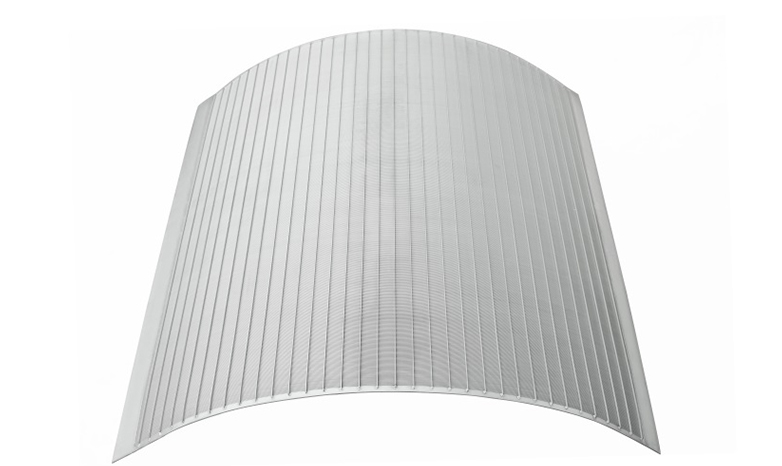
A wedge wire screen uses profile wires to create continuous, V-shaped slots. Blinding occurs when material partially or completely blocks these openings, reducing the area available for liquid to pass through. As a result, flow may decrease or liquid may accumulate upstream.
Three different conditions are often described as a blocked screen:
| What You See | Possible Cause | First Check |
| Packed material across part of the screen; flow decreases | Material lodged in the slots | Feed sample and cleaning records |
| Liquid flows unevenly across the screen | Uneven feed distribution or settled solids in the feed box | Weir level, feed box and inlet |
| Polished wire surfaces and visibly wider slots | Screen wear rather than blinding | Slot measurements at several points |
Cleaning a worn panel cannot restore its original slot opening. If the openings have become wider in the feed impact area, the panel may need replacement.
Several feed and operating conditions can cause blinding:
| Cause | Typical Signs | What to Check |
| Particles close to the slot width | Compact deposits that resist normal rinsing | Particle size distribution near the slot opening |
| Fibres, hair and plant matter | Material mats across the slots, often near the feed end | Upstream screening and debris load |
| Grease, oil or biofilm | Thin deposits that reduce water flow | Influent chemistry and upstream dosing |
| Mineral scale or iron precipitate | Hard deposits that resist rinsing | Water hardness, pH and cleaning compatibility |
| Excess polymer or floc carryover | Sticky deposits that smear across the screen | Coagulant and flocculant dosing |
| Feed overload or settled solids | Localised deposits across the screen | Feed distribution and grit accumulation |
More than one factor may contribute to blinding. For example, fibres can trap fine particles, while grease can encourage mineral deposits to accumulate.
Before changing the screen specification, follow these checks:
1. Inspect different screen areas. Check the impact zone below the feed, the middle of the arc and the discharge end. Note where deposits form.
2. Take photos before cleaning. Record the original deposit pattern before rinsing removes the evidence.
3. Check slot openings. Measure several locations using a suitable tool for the actual slot size, such as an appropriately sized feeler gauge or optical measurement method. Avoid forcing tools into the slots or damaging the wire edges.
4. Examine the feed material. Check the particle size distribution, especially the fraction close to the slot width. Average particle size alone may not reveal the particles causing blockage.
5. Review operating conditions. Compare current flow and available hydraulic head with commissioning records. Changes in inlet conditions can affect screening performance.
6. Check cleaning records. Review cleaning frequency, methods and any recent changes in feed composition, solids loading or upstream dosing.
These checks help determine whether the problem comes from the feed, hydraulic conditions, cleaning practices or screen wear.
Prevention starts with understanding the feed material and keeping operating conditions stable.
• Control incoming solids: Remove grit and long fibres upstream where the process allows.
• Select suitable slot openings: Base the specification on particle size distribution and the required separation cut. Smaller slots are not always better and may increase the risk of blinding.
• Maintain even feed distribution: Keep the feed weir level and prevent solids from settling in the feed box.
• Monitor chemical dosing: Changes in polymer or flocculant dosing can increase sticky deposits on the screen.
• Use suitable cleaning methods: Loose solids usually respond to a low-pressure water rinse. Grease may require warm water or a mild alkaline wash, depending on the deposit and material compatibility.
Chemical cleaning must be checked against the actual stainless steel grade, chemical concentration, temperature and contact time. Rinse thoroughly after cleaning. Avoid metal brushes and scrapers, as they can damage profile wires and change the slot openings.
There is no universal cleaning interval for every installation. Monitor flow, hydraulic head and cleaning frequency, and keep records of the material removed during maintenance.
Cleaning is not always the solution.
If the panel is clean but throughput remains low, check the hydraulic conditions, feed distribution and available screening area. If the slot opening is unsuitable for the feed, review the specification using the particle size distribution and required separation cut.
If the profile wires have worn and the slot openings have widened, cleaning cannot restore the original screening performance. A replacement sieve bend screen panel may be necessary.
The results of any adjustment or replacement depend on the feed material, hydraulic conditions and existing panel. A fixed performance improvement cannot be assumed without evaluating these factors.
1. What Causes Sieve Bend Screen Blinding?
Common causes include particles close to the slot width, fibres, grease, mineral deposits, excess polymer and uneven feed distribution.
2. Does a Smaller Slot Opening Prevent Blinding?
Not necessarily. Smaller openings may retain more material and increase the risk of blockage. Slot selection should match the feed characteristics and required separation cut.
3. How Often Should a Sieve Bend Screen Be Cleaned?
Cleaning frequency depends on the feed and operating conditions. Monitor flow and hydraulic head to establish a suitable maintenance interval.
4. Can Chemical Cleaning Damage Stainless Steel Wedge Wire?
Yes. Chemical compatibility depends on the stainless steel grade, concentration, temperature and contact time. Always confirm compatibility before cleaning.
If your sieve bend screen blinds repeatedly or shows signs of slot wear, reviewing the screen configuration may help you identify a suitable solution.
YuanLv Filter manufactures custom sieve bend screens and replacement wedge wire panels with different slot openings, dimensions, and configurations to meet application requirements.
Contact our team to discuss your feed material, existing screen specifications, and replacement requirements.
Previous: None